The Feature Trap
One of the most common mistakes in product development is believing that more features automatically make a product better.
Customer feedback arrives.
Sales teams bring requests.
Executives point to competitor capabilities.
The roadmap grows. But customer satisfaction does not necessarily grow with it. In many cases, the opposite happens. Products become harder to understand, harder to use, and harder to maintain.
This is where the Kano Model becomes useful.
One of the most interesting aspects of the Kano Model is that it connects product benefits to emotional responses. Product teams build features. Customers experience benefits.
Sometimes frustration.
Sometimes neutrality.
Sometimes satisfaction.
And occasionally delight.
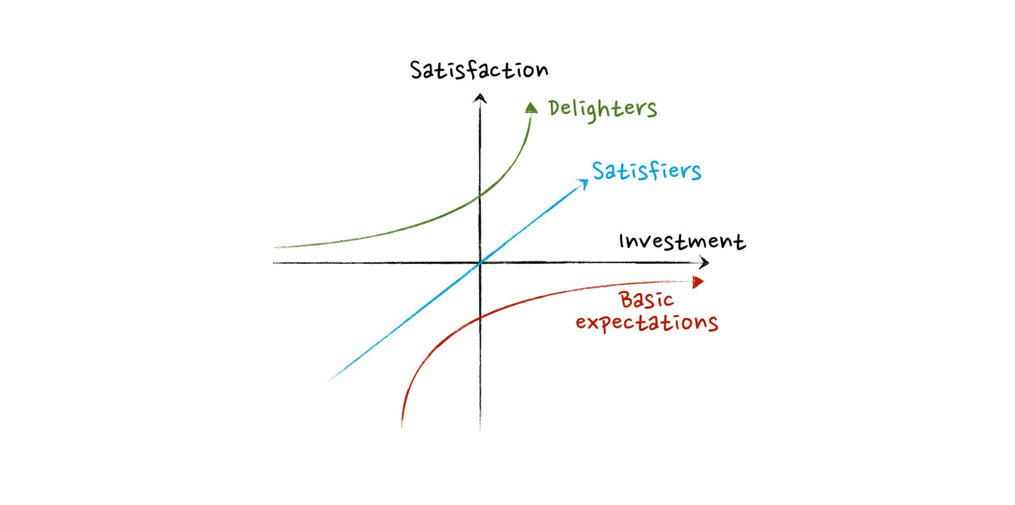
Just as important, the Kano Model highlights how customers react when a benefit is missing. Some missing benefits create immediate frustration. Some simply reduce satisfaction. And some, when absent, are barely noticed at all. Understanding both reactions is critical.
Basic Expectations - Must Have Benefits
Some product benefits exist primarily to prevent frustration. Customers assume these benefits will exist. They rarely praise them when they do.
Reliable login.
Saving work correctly.
Pages that load quickly.
When these benefits fail or disappear, frustration appears immediately. But when they work perfectly, customers rarely feel delight. The experience simply feels normal. These benefits prevent dissatisfaction, but they rarely create excitement.
Satisfiers - Performance Benefits
Some benefits directly improve satisfaction. When these benefits improve, customers notice. When they degrade or disappear, satisfaction drops.
Faster search.
Better reporting.
Cleaner workflows.
These benefits create a clear relationship between product quality and customer satisfaction. This is where many products compete and improve over time.
Delight Benefits
A small number of benefits create something different. They produce surprise. Customers did not explicitly request them, but once they experience them, they love them. These are the moments that make a product feel thoughtful or innovative.
Interestingly, delight benefits almost never appear in feature request lists. They usually emerge from a deeper understanding of how customers actually work.
Why Customer Requests Can Be Misleading
The Kano Model highlights an important pattern. Most feedback customers provide focuses on missing or broken benefits.
Users describe friction.
They request fixes.
They explain what feels difficult.
Product teams sometimes translate this feedback directly into new features. But customers are usually describing symptoms, not solutions. Understanding the underlying benefit requires interpretation.
The Pattern in Modern AI Products
This pattern is increasingly visible as organizations rush to add AI capabilities.Roadmaps quickly fill with AI features.
AI summaries.
AI assistants.
AI-generated content.
Some of these improvements are valuable. But many simply extend basic expectations or add marginal improvements. Adding AI features alone does not automatically create delight. Real value appears when AI improves an important workflow, decision, or outcome. That is where benefits — and the emotional responses they create — begin to change.
What the Kano Model Reminds Us
Frameworks like the Kano Model do not tell product teams exactly what to build. But they help explain how different kinds of benefits shape customer experience. Some benefits simply prevent frustration. Some improve satisfaction. And a few create genuine delight.
Understanding the difference helps teams avoid the trap of assuming that more features always mean a better product.
Great products rarely come from building everything customers ask for.
They come from understanding the benefits customers truly need.